
View transcript
Episode Transcript:
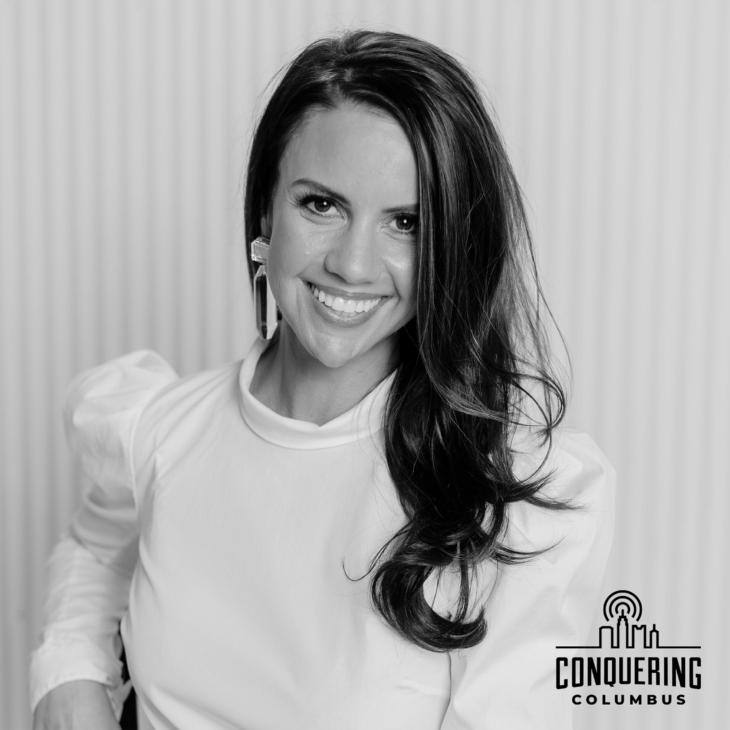
[00:00:07] Alex: Hey everybody. Welcome to another episode of Conquering Columbus. I’m your host, Alex Avery, and today on the show I’m sitting down with Lindsay Fork, founder and CEO of Luxe Bridal Brands. Luxe started right here in Columbus with a clear mission. To deliver best in class bridal fashion and an elevated personal experience without the intimidating price tag.
[00:00:26] Alex: Since then, the brand has expanded nationwide serving brides across the country while staying rooted in the values that shaped it. Early on, we’ll talk about Lindsay’s founder journey, how she’s scaled a modern bridal brand, and why Columbus continues to be a powerful launchpad for national growth. Let’s get into it.
[00:00:45] Alex: Yeah. My name is Lindsay Fork. I own Luxe Brands, and we were founded in 2008. Welcome. I appreciate you taking the time. This is a, really interesting story and I’m excited to dive into it because not only did you found this [00:01:00] successful organization, but also entirely from the state of Ohio built, born and raised.
[00:01:05] Lindsay: Tell us a bit about, you know, kind of how things started for you is in your career and, and how you got into this industry and, you know, let’s, dive into kind of what started this. Sure. you want me to go in the way back time machine and talk about where I was born and raised? Yeah, let’s do it.
[00:01:18] Lindsay: Okay.
[00:01:19] Lindsay: I was born and raised in a really small town, between Bowling Green and Fremont up north called Gibson One stoplight town. like I said, my parents, my grandparents, they were all born and raised there as well. my mom and dad were a retail entrepreneurs actually from 1986 until about two years ago.
[00:01:35] Lindsay: They just sold their business. So, as my dad’s. Business was growing and scaling. We actually moved the Toledo area just to make things more convenient with the commute and not have to go so far for school. So I ended up going to Notre Dame Academy, which is an all-girl Catholic school in Toledo.
[00:01:51] Lindsay: Yeah, freshman through senior year, graduated, Notre Dame and went to Cincinnati. ’cause I ended up at Xavier University, which I absolutely love my [00:02:00] experience there. entrepreneurship, major Spanish minor, got to Cheerlead for the basketball team there, which was super exciting. Involved in the, business.
[00:02:08] Lindsay: Fraternity, Delta Sigma Pi and just had a, just had a great experience in college. that’s kind of what started my bridal journey. I ended up getting a part-time job at bridal and formal in Cincinnati when I was 19 years old. I had always loved bridal fashion, even as a little kid. always tell the story that my mom would take me to the library and instead of getting.
[00:02:30] Lindsay: Little children’s books. I would go over to the periodicals and pick out wedding magazines and, probably, you know, stole some pages out of those wedding magazines to create my bridal scrapbook. So, had always just been obsessed with bridal fashion and through that experience of working at bridal and formal, I just.
[00:02:47] Lindsay: I learned a lot about sales, about the product. my obsession grew, I guess you could say, but there was really nowhere to go from there. And I started having that guilt of, I’m not really doing anything that, [00:03:00] of why I went to college. So, ended up working in sales and marketing a lot through my twenties and leading up to probably 2006.
[00:03:08] Lindsay: Relocated back to Columbus and, worked for the home building industry. So I was a sales rep for a home builder. I ended up at a magazine selling ads to builders and developers. And then of course, the downturn started in oh 7, 0 8. So the magazine got squashed here in the Columbus market. I lost my job at that time.
[00:03:30] Lindsay: I was actually pregnant with my daughter. and as I was out and about looking for jobs, I. Realized that nobody really wanted to hire, someone that was 20 weeks pregnant. And so, You know, around that time I had also been looking into potentially getting into a bridal franchise that was available at the time.
[00:03:47] Lindsay: And I remember talking to my parents about it and you know, my dad kind of pulled me aside when he really saw how serious I was about filling out this application, going to the SBA office to think about [00:04:00] getting a loan. And he, he said, you know, looking back at your success in sales and even your passion for bridal, you know.
[00:04:08] Lindsay: I would, I would maybe suggest thinking about doing this on your own instead of doing a franchise and paying royalties back to somebody else. And, my sister was getting married at the time, so we had some experience with some of the boutiques in town. And, as I like to say, my dad thinks everything’s for sale for the right price and there’s no harm in asking.
[00:04:27] Lindsay: So, that’s exactly what we did. We went to, the owners of Jun Marie and. Expressed interest in buying their shop. It was adorable. It was cute. again, had gotten my bridesmaids dress there for my sister’s wedding and we, that, that’s just really what started the conversation. I won’t bore you with the details of that, but obviously that came to fruition in July of oh eight.
[00:04:48] Lindsay: So my daughter was like fresh, you know, two months, three months old, and here I am signing paperwork to be a business owner at the tender age of 28 with a newborn. So that was a little [00:05:00] crazy, but it was a dream come true. that store was located in Worthington 800 square feet and Charming, and I just, yeah, I just ran with it.
[00:05:09] Alex: So that’s the start of how, how this all came to be so that that started this, this whole journey. And it sounds like even the experience leading up to it, the things that even though it wasn’t a direct path, understanding that, you know, sales, marketing, a lot of the business background obviously leads into, starting in, in.
[00:05:27] Alex: Operating a business, not, not necessarily fully through, but you at least have some of the foundations and then you have this passion for bridal. And I think bringing those two together seems supernatural. And I think, your dad’s advice is super wise. You know, you, you have. An opportunity to bring those two things together and you took it and I think that’s incredible.
[00:05:44] Lindsay: So now tell us about where you guys are now. What is, what is the company looking like now and and size and locations and, you know, we’d love to hear more about where, that kind of some of those growth points were for you throughout the last few years. Sure.
[00:05:58] Lindsay: so today, we are at. [00:06:00] So I, I’m a multi-brand, multi-location company.
[00:06:03] Lindsay: we go by Luxe Brands. Now Laie is the, the founding store, and we still just have that one location here in Grand View. we actually purchased our building a couple of years ago and we’re right here on Good A and instead of 800 square feet, we are now in about 6,300 square feet. So that’s, that’s really nice and I have a whole amazing team over there, that, that just, you know, rocks it.
[00:06:25] Lindsay: So we went from just me to. To a large, a large situation, which is awesome. And then, Luxe Redux, which is my next brand, and that’s the brand that we’re growing and scaling. We have, 12 locations just about ready to be 13. We’re actually opening Orlando in a couple of weeks, so I’ll be down there for that grand opening.
[00:06:43] Lindsay: Charlotte will be number 14, which is what we’re opening in April. And then we have two more on the docket for 2026. So by the end of this year, we will be at. I think it’s 18 locations. I have another brand that we started two years ago called the Ohio Bridal Outlet that’s down in [00:07:00] Jeffersonville.
[00:07:00] Alex: And so yeah, three brands, 16 locations Nationwide Takeover. That’s incredible. So you, that’s what we call ourselves is the Luxe, the Luxe Takeover. That’s our little text message chat that we all have going. I love it. I love it. That’s incredible. So, I mean, obviously throughout this, this growth, I would, we’re gonna dive into a little bit about like what you’ve been going through and how you’ve, how you’ve managed that growth.
[00:07:22] Alex: But before we get there, I want to understand a little bit more about. What you saw from scaling from one, one location in a, in a town, very familiar to you, to many locations outside of the state and, and you know, in these new areas, new places, new audience, new customers. What did it look like to kind of adapt to those different areas?
[00:07:42] Lindsay: What kind of research went into those locations as you kind of vetted them out? Love to hear a little bit more about the behind the scenes of what, what went into that. Yeah.
[00:07:53] Lindsay: Our second location, it’s funny, it’s not. I wouldn’t say it wasn’t strategic, it was strategic for me in that there was, obviously, there was [00:08:00] still risk in saying, okay, I’m gonna go open my second location.
[00:08:03] Lindsay: But there was also this comfortability with our second location was Cincinnati and it was in the Reding Bridal District, which is where I grew my wings. Right. It was, it was in this, in the reading bridal district of people. Do or don’t know, it’s, it’s one street in Redding, just north of Cincinnati that has like 12 to 14 bridal stores all on the strip.
[00:08:23] Lindsay: So people come from all over five state radius to drive and shop there. So I thought if I’m gonna open a second location, I’m gonna open it somewhere. It’s really advantageous. I know the brides are coming there. So that was our second location, Indianapolis. another opportunistic situation. Luxe Redux.
[00:08:41] Lindsay: I should, I guess I should back up and explain what Luxe Redux does. So, Jun Marie, my, my baby, my first, my firstborn, they, we, we do a special order traditional technique over there where, bride comes in, says yes to a dress, we measure her, we order the dress. It takes about six to eight months to [00:09:00] come in.
[00:09:00] Lindsay: store. Store has just a store full of samples. So as. Seasons would go and seasons would change. I ended up with this overflow of samples and sample sales just really weren’t working. Hence why I started Luxe Redux. we sell the samples off the rack for a discounted price to brides who are looking for luxury for less in a sense.
[00:09:20] Lindsay: So when I started Luxe Redux doing that just here in Columbus, my, my friends in the industry who had other Liz Marie type. Store saw what I was doing, and they were like, well, we have the same problem. Like we have a, we have a basement full of dresses, or, you know, I’ve started, I’m, I’m paying for a storage unit offsite, or my husband wants me to get these dresses out of our basement, sort of thing.
[00:09:40] Lindsay: So they were like, can we send you our underperforming inventory as well? And I, I said. Of course, like sure. I really had no place to put them. At the time I had no business taking these dresses, but I was like, I will figure this out. So these boxes just started arriving and, poor Ashley, which she’s still with me, she’s my longest tenured employee.[00:10:00]
[00:10:00] Lindsay: My work wife, she’s like, Lindsay, why, why do we keep saying yes to all these dresses? And I’m like, Ashley, we’re gonna figure it out. We’re gonna figure it out. And of course, you know, Cincinnati, I’m like, we just need a second store. She’s like, okay. so we have our second store and then the third store, the third location Indianapolis came to be because one of our consignors that was sending us dresses sent a really large list over like really large.
[00:10:23] Lindsay: And Ashley’s like, they have like. 200 dresses on this list. And I’m like, well, that’s not normal. And I’m like, you should ask them. They’re probably wanting to, to wrap up their business and be done. And, and sure enough that that was it. So I reached out to the owners who I knew well, and we just had a conversation and they’re like, you know, our landlords are amazing and I’m sure they would love for, you know, another bridal shop to be in here.
[00:10:46] Lindsay: So that’s how Indianapolis came to be. And, you know, I could tell a story. All the way down to us picking Orlando, which is kind of a similar situation actually. But, you know, Pittsburgh came to be, I lived there for a year. I wa year or two. I [00:11:00] was familiar with the city. Like everything was like, there was like a heart string to it in a sense.
[00:11:05] Alex: And, you know, the other cities that we’re in are St. Louis, you know, we have Dallas, San Antonio, Houston now. So Orlando Charlotte’s coming on board. We have Cleveland, Nashville, Detroit. So. Yeah, so it sounds like a lot of the expansion really came from points of where opportunity and your relationships kind of overlapped and, and I think that’s unique.
[00:11:30] Alex: I mean, I think most folks probably try to over-engineer their expansion plans and build this whole intricate plan, which really never actually works out in that way. But they try to, you know, over-engineer that. That expansion. And it sounds like you’re looking at it from an organic point of view of like, where, where do we see market opportunity in front of us and where do we see things that we can move on fairly quickly without, you know, a whole lot of, you know, investment in all these other things that may go into it.
[00:11:56] Alex: Let’s just, let’s go where it makes sense and let’s go where, you know, where we can [00:12:00] find the right customers and right, right market and right opportunity where those things all line up. And I think that’s fascinating when you’re looking at it from, from that growth standpoint. And now you’re eyeing your 14th location, you know?
[00:12:11] Alex: And, and it sounds like all of them have had very similar sort of, sort of, journeys to get to those stages. That’s incredible. And the team itself now that’s supporting this, this large organization, you guys have, many, many different. States and customers and inventories, that’s gotta be managed across all these different locations.
[00:12:30] Alex: Mm-hmm.
[00:12:30] Alex: tell me a bit about your team. You know, how long have, have you mentioned you have your first employee, your work wife, and you know, all the way now to, I believe, your hundred and 20th employee now? Yeah, we’re at approximately 120. That’s incredible numbers now. It’s crazy. That’s so cool. And the last six months has been, it’s been wild.
[00:12:48] Lindsay: We’ve moved our, we’ve moved our distribution center, so we got a distribution center just a couple of years ago for the first time. And we started out in, you know, 1200 square feet. ’cause when I, when I talk [00:13:00] about the other retailers that send us their inventory, that inventory, as of. I don’t know, two and a half, three years ago, it was just coming to Columbus Flagship.
[00:13:08] Lindsay: That’s where it was coming. That’s where we were unboxing things, processing the dresses and then sending them out to our other stores. So we finally, you know, obviously we finally got to a point where like, we can’t do this anymore. It’s obviously disruptive just to the Columbus day to day and the appointments.
[00:13:23] Lindsay: So we, you know, I feel like it’s like we bought a zoo. We bought, we got a distribution center. We got 1200 square feet, and quickly we were. Bursting at the seams. Again, we have a lot of sayings and acronyms and all sorts of things in the company. So we were bursting at the seams pretty, pretty quickly and then moved to 30, 3500 square feet, earlier in 2025.
[00:13:46] Lindsay: And then right before we wrapped up this past year in 2025, we moved to, 15,000 square feet. So, and we’re using every bit of it. I looked at my, we have a DC. A DC operations [00:14:00] manager that just came, came on board. I think he told me yesterday. He is been there for 65 days and I, I looked at him and I was like, Sean, I was like, we have lots of room out here.
[00:14:09] Lindsay: And he just shook his head. He is like, no, we don’t. And I’m like, you, you can’t tell me that because we cannot move again. So yeah, in the last six months we’ve hired. our second district manager, we’ve hired a senior financial analyst. We’ve hired our distribution operations manager. We’ve hired, a marketing director.
[00:14:27] Lindsay: We’ve hired two more social media content creators, and, we’ve hired a planner allocator. And finally we have hired a new, vice president of hr, which. Thank it. With 120 employees. Yes, yes. That, that’s the right size you’re gonna need, you need some support at that level. I’m, I’m curious about, you know, you, when we were, you, you’re starting your, your company and starting your first location and really kind of building out of a sense of passion and, and love for the industry and love for bridal [00:15:00] fashion.
[00:15:00] Lindsay: Do you still feel that same passion around bridal passion today? And do you still feel like that’s, that that fire is still there? I do. I mean, I get to, I, I’m lucky ’cause I get to dabble, I get to dabble in the merchandising inventory, fashion of all of it because I still attend market for ery. I get to go to bridal market, twice a year in the fall and the spring.
[00:15:22] Lindsay: And I’m going to Chicago for our mid-range items. I’m going to New York City for, The big luxury bridal fashion week. So that’s incredibly fun and exciting, and it allows me to obviously keep a pulse on what’s going on when day to day. I’m, I’m not in the stores day to day, and I’m not in a bridal suite selling to a bride every day.
[00:15:42] Lindsay: But, you know, that for me is like riding a bike. I mean, I, we have a, we have a designer in town right now. Staying right there. And I’ll see him this weekend and he’s in town from, from Europe, and it’s, it’s exciting. Like I look forward now to going into the weekends and just, working with him, with the bride.
[00:15:59] Lindsay: [00:16:00] So I, I really get to do a myriad of, of things still. So, yeah, I still have a, I still definitely have a passion for, for the bridal gowns. And I’m, you know, I’m just, I’m learning, I’m learning a lot on how to lead a leadership team and lead. you know, department managers and the whole crew like out there in the field, out in the stores, it’s.
[00:16:24] Lindsay: You know, it’s exciting, but it’s stressful also, and tough. And, I’m probably, I mean, I’m hardest on myself, even if people don’t realize that I’m doing that. I, I have, you know, I had a call with one of my mentors today and he’s like, I’m just gonna say it, Lindsay. You wake up, you wake up every day trying, or basically you wake, you wake up every day.
[00:16:49] Alex: Knowing that things are not good, good enough. And I know, I know how he meant that, but you know, I have to, I have to harness my perfectionism sometimes to realize that [00:17:00] it doesn’t, it doesn’t have to be perfect. And I could see that it pained you, even just to say that I know last part. Self-awareness. It’s, it is, it is true though.
[00:17:09] Alex: I mean, and I think looking at one, how fast you’re growing and how quickly, you know, things have to adapt and, and you know, looking at how the team size, I mean, things are always not gonna be perfect and there’s always gonna be some, some sort of struggle. What would you, I mean there’s a lot of, a lot of business owners and entrepreneurs listening.
[00:17:27] Alex: What would you tell them about. Some of the things that maybe if you were to talk to yourself, you know, just a few years ago, looking ahead at some of the expansion and some of the, the growth in the company, is there anything that you would look back and, and tell some folks who are also looking at a potential expansion and and growth opportunity in front of them that maybe would help them?
[00:17:46] Lindsay: I actually thought about this question earlier and I feel like I had a really great answer and now it’s escaping me. But the thing that is coming to my mind right now that we’ve talked a lot about over the last couple of weeks that, you know, Q4 of last year was really as much growth [00:18:00] as we had and how, I always say things looked amazing on paper, meaning we had year over year growth, top line, bottom line.
[00:18:07] Lindsay: I mean, you’d slide that to anyone and they’d be like, oh, they have no problems. You know, everything looks, looks great. I think internally we realized in, in Q4 with all of the growth and all of the new people and the move and opening up two stores in Texas in the same week. I mean, there was just a lot going on.
[00:18:24] Lindsay: And then you try to balance that with personal too. You know, we all. We all have lives outside of work and my husband and I have three kids. And, it’s just, there was a lot going on and it was the holidays and we’re trying to, you know, balance the joy of that. And we just realized that there were a lot of foundational cracks in processes that, you know, had worked six months ago that we’re not working even three months later and weren’t gonna work for 2026.
[00:18:54] Lindsay: And we realized that. You know, change, like change management. I know that’s such a buzzword, but [00:19:00] the way we were going about change management was not productive. And it wasn’t, we didn’t know, you know, it’s not, it wasn’t intentional. It’s just we didn’t know what we didn’t know. And I think we’re all so busy all the time and racing from one thing to the next that we were barely breathing as we were moving forward and, and changing things.
[00:19:19] Lindsay: And so things weren’t getting rolled out. Probably in the best way that they should have been. And we’re really taking a step back now and saying, does, do things need to happen that fast? Do they really need to happen that fast? Does this person need to race and go tell somebody about, you know, how we’re gonna change this SOP or this process?
[00:19:39] Lindsay: And the answer is no, because honestly, when you’re doing that it, it probably messes things up in the long run. So we’re really. We’re really honed in and focused on being better at change management and, and thinking through things a little bit, a little bit better. But yeah, and just given yourself grace along the way.
[00:19:57] Alex: Again, I don’t do that [00:20:00] enough, but yet I’ll do that for other people. So, and I mean, you kind of touched on a little bit from a leadership perspective when we. You know, going through this growth phase, you’re, you’re growing the business, so you have sort of the mechanics, the financials, and you have the real estate involved.
[00:20:16] Alex: You have all these other things, the inventory management, everything that, that goes on around the mechanics of the business. And then you have the human side of the business and, and leading an organization in that way. tell us about what your growth has looked like from a leadership perspective, and what are some of the things that you lean on and look towards and want to instill in your team to make sure that that passion that you had from day one and still have is carried through the business?
[00:20:39] Lindsay: Accountability comes to mind first and foremost, it’s been. It’s been a difficult shift at times to really lean into accountability, more when you are such a heartfelt organization that’s built around those heartfelt moments. Right. our number [00:21:00] one. Job and duty and what we give so much is making sure that that bride has a, a perfect day experience when they come into our stores.
[00:21:09] Lindsay: Right? and there’s a lot that goes on behind the scenes in order to make that day possible for the bride. we’ve never missed a wedding. We’ve never not delivered a dress for, for someone’s wedding. I pride myself on that. And you know, there’s just so, so many factors that keep the wheels turning to make sure that that happens.
[00:21:30] Lindsay: And, as we continue to grow and scale. The stores, especially, I mean, they are the catalyst for everything that’s going on. And if they’re not running optimally, whether it’s through, you know, the way they’re giving that experience to the bride or even their backend operations and that, that can lead to, it can lead to chaos.
[00:21:54] Lindsay: And if we don’t work really hard to hear from [00:22:00] them what’s working and what’s not working. While also holding them accountable and being aware of what their issues are. You know, we’re failing and it is, there is a balance there of. We can’t just sit at home office and talk to them. You know, we have to be out there.
[00:22:18] Lindsay: We have to talk to them in person. And I mean, that’s what’s great. I have two district managers that, you know, have joined the team within the last year, and they come with a wealth of experience, one person in, you know, retail soft goods. So, and they’re done that. And then another one that comes with,
[00:22:34] Lindsay: More of a pharmaceutical and like Walgreens, Starbucks background and knows what it’s like to manage multi-location, multi-unit. So I lean on them a lot because again, I, I started out as a shop girl, you know, it was just me in 800 square feet. So, I mean, what what’s been humbling for me is, and this is something I was thinking about before coming over here, is, you know, I, I’m getting to that point where I don’t know everything anymore.[00:23:00]
[00:23:00] Lindsay: I knew everything before I knew. I knew how everything ran. Every department, I knew why we were implementing systems. I knew how those systems ran. If somebody had an IT problem, I was the one that they came to. If somebody needed to build a couch, I got out the toolbox. I mean, that sounds so cliche. I feel like every entrepreneur says that like, oh, I’m the janitor too.
[00:23:20] Lindsay: But really I was. I was everything. And that is probably one of the hardest things to, to let go on, to let go of, and then have to look to another expert in the company and say, Hey, I, I don’t know how to fix this. Like, I need to lean on you and I need to lean on your past experience and like. Let’s, let’s teamwork this together.
[00:23:43] Alex: That’s interesting. I mean, I think, and I think a lot of entrepreneurs go through that stage, and to be honest, I think most of ’em go through that sooner than you did. I think now you’re, I mean, the fact that you can still be that hands-on and involved in the business at the size that you are. And know, you know, 99% of things that are going on [00:24:00] now.
[00:24:00] Alex: And now it’s like, okay, there’s 1% now and it’s a little uncomfortable. 1%, but, and the, and that percentage will grow as you, as you scale. But I think that understanding that the. The team around you has such a big role in, you know, the growth now from, from this point on in the business. What are you looking at in terms of the dynamic of the, of the team, particularly leadership team for folks who are trying to build a leadership team around them?
[00:24:24] Alex: What are some of the things that you’ve looked for when bringing on folks into your, you know, into your, like love your passion business here. This is your, this is your, your life and you’re inviting folks in to help you kind of build and, and take the vision forward. What, what do you look for in those folks?
[00:24:40] Lindsay: Yeah, great question. We, I mean, we have a set of core values that we have. We have six core values. We adopted those core values when we started the EOS management system. built around the book traction. Most people are probably familiar if they’re listening to this and in a small business. it’s been, it, it honestly has been our saving grace.
[00:24:58] Lindsay: And I give, I give EOS [00:25:00] and the integrators that I’ve had along the way, implementers I should say along the way that have helped us. Helped us with that because without that vision traction organizer and that VTO to really set us up for, you know, the one year, the three year and the five year growth plan, I, I don’t honestly know that we’d be as far as what we were, as what we are right now.
[00:25:21] Lindsay: and so with those core values, what I’m looking for in my leadership team is my number one is trustworthy. have to be trustworthy, value communication risk. Respectful service minded with attention to detail, positive and energetic. And of course I’m gonna like forget the sixth one, but I’m looking for all those things and I, I guess, you know, there’s a.
[00:25:42] Lindsay: The, the trustworthy part for me again is I’m gonna let you fly and I’m not going to micromanage any anyone as soon as I know that I can trust ’em. And that just means that we need to work together, you know, maybe, maybe closely for a while. And I just, I have to understand how you work, how you lead. I [00:26:00] want you to understand how I work and how I lead.
[00:26:02] Lindsay: And we don’t always have to agree, but we have to respect one another and have open and clear. Transparent conversations and the people that have. I think lasted the longest in the company. ’cause I can be a pretty intense person is are people that are willing and able to be vulnerable with me, to be transparent with me and understand that we can have a tough conversation, we can have hard conversation and we can walk away from that and still be like, you know, love you girl.
[00:26:34] Lindsay: Love you man. and have a glass of wine, you know. A little bit after. I mean, that, that to me is really important. Like we, we have to leave egos at the door. We need to talk about, talk about the hardship and, and move on. And that’s, that’s what I’m looking for. And I’m, I’m, I love the fluff, don’t get me wrong.
[00:26:54] Lindsay: Again, I love, I love the heartfelt, I love the fluff. I love the empathy, but it, for me, [00:27:00] it’s like, let’s work hard, then play hard, and let’s hold people accountable. Let’s get our jobs done, like we’re here. We’re here to do the work, and we’re here to give brides a great experience. We’re here to enjoy one another, but, and then, and then let’s celebrate afterwards.
[00:27:17] Alex: And you’ve, you’ve touched on this a few times, the experience side of the business. It’s, it’s so critical and I, and I don’t want to go through this whole conversation without really diving into it for at least a minute.
[00:27:29] Alex: Tell us a bit about what goes into setting up that, that experience for that soon to be bride who’s, who’s shopping and is looking for a, the perfect dress, the, the perfect, you know, sort of embodiment of what they see themselves as and how do you set them up for success when you’re, when you’re creating this whole space, I mean, you’re creating a space around them understanding that this is.
[00:27:51] Alex: One of their largest, most significant, important things that, that goes into this day and ultimately into their life in a way because it’s, it is just [00:28:00] hopefully once, but even if it’s two or three times, you just, it’s not something you’re going in every day. You don’t have an annual subscription. You’re not buying it every month.
[00:28:08] Lindsay: This is something so special and it’s something so meaningful. What do you do to set up your, your brides for success and your staff in that experience and, and kind of what goes into that? Yeah. Yeah. I mean, you, you nailed it on the head. I mean, this is. Likely the most important garment and likely the most expensive garment that they’re ever going to purchase and wear.
[00:28:28] Lindsay: And for me, and the whole reason Luxe came to be, and even the OBO, the Ohio Bridal outlet is for me a bride. Should I. Not compromise their experience based off of their budget. And I think so much of bridal gown shopping in the past, and, and still is in some, in some places, is about that. It’s like if you have a, if you have a luxury budget, if you’re spending $5,000 or more, you’re gonna go in and have, and the store’s gonna look like this and you’re gonna have, you know, an elevated experience.
[00:28:58] Lindsay: And when Luxe came to be, [00:29:00] I. I just knew, I’m like, these brides that are financially smart wanna be sustainable. Just because they don’t wanna pay full price for a dress doesn’t mean that they should be going into a bridal shop with old shag carpet and gross silk flowers in the window, you know, and not a one-on-one experience.
[00:29:19] Lindsay: They’re just, you know, thrown into a dressing room trying to figure it out on their own. And so that, that was really. My goal at first was like, look, you can come in and you can find this Vero Wing gown that was $10,000 and maybe now it’s $3,000. And obviously we have so many different price points now and, and so many different opportunities, but that, that was really important to me and.
[00:29:43] Lindsay: I just felt like I learned so much when I was 19 and started, started selling wedding dresses and I knew how to give that bride a good experience. And so our training, our training now in all three of our locations is just that it’s heavy on product knowledge. It’s heavy on. [00:30:00] Listening to the bride and if we have an opportunity to talk to that bride, and we do in several situations to talk to her before she even comes in and really learn whether it’s her sharing, her Pinterest board, her talking about the experiences that maybe she’s had, that she.
[00:30:14] Lindsay: It hasn’t enjoyed at other places, so that we can be sensitive to that is, is really important. So we’ve, we’ve upped our appointment times. I mean, when I started I was doing an hour appointment and I could crank. I mean, I was still giving you a good experience, but it was a lot to just do an hour appointment on a Saturday and.
[00:30:33] Lindsay: All the way from 10:00 AM to 5:00 PM but now we do two hour appointments and we’re really taking them through a journey and something that we do a little bit differently, which I know not everybody likes, but you know, we’re never gonna stop doing this, is I, we don’t, we don’t call our people salespeople.
[00:30:49] Lindsay: We, we call them stylists because that’s really what they’re doing. They are heavily trained on understanding silhouettes, designers. [00:31:00] Product knowledge, fabrics, you know, they, they study and research. Where’s the bride getting married? You know, is it in a church? Is everything just at the State House? What kind of vibe is the bride going for?
[00:31:11] Lindsay: And we have so much inventory on the floor, different price points, again, different aesthetics that we don’t want the bride to waste time and her family to waste time. Although they think that’s fun, going out on the floor and pulling a bunch of stuff that you know, may not be conducive to helping them find their dress.
[00:31:31] Lindsay: So we sit down and kind of do a little interview. And, and go through their card and everything with them before they start trying on. So we’re actually going out and pulling the dresses for them. And I, I think some people are used to that now. I think there’s other places that do that too. they’re weary about it at first, but really it’s just we want you to sit back, hang out with your family and friends, and enjoy the experience and let us do what we do really well.
[00:31:56] Alex: And of course, if we’re not getting it or you think we’re way [00:32:00] off pace, you know, that’s again, it, it all comes down to communication and conversation. Like, tell us what you’re liking and not liking. We’re gonna go do several rounds of this. I love that. And I think that starting with that mission of, you know, this luxury fashion doesn’t have to be unattainable, you know, and bringing that to, to every bride out there and everyone who’s looking for that special garment in, in terms of that impact on.
[00:32:26] Alex: Like the broader community.
[00:32:34] Alex: Has there been, from the brand standpoint and from the retail standpoint, have you guys been looking at how, you’ve been involved with, different community efforts? Have you been involved with, you know, obviously you’re in many different cities and you get to see a lot of these different places.
[00:32:41] Alex: tell me a bit about what goes into, you know, your impact on the community there and what you’re seeing in those different neighborhoods and different. Styles and different fashions, but also like their quirks and their interests and those types of things. what does that look like at each, at each community level?
[00:32:58] Lindsay: Yeah. it is [00:33:00] Ashley, who I was talking about earlier, my work wife. She’s our buyer now. She’s, migrated into that role and she’s great at it. And it, it is funny ’cause when she plans and allocates, W she, she realizes, you know, like different, different cities and different stores are selling, are selling different things.
[00:33:16] Lindsay: So that’s, that’s super interesting. ’cause we’re really not that spread out. But you will, Pittsburgh brides are definitely different than our Detroit brides who are very different than our, you know, Nashville brides. But at the end of the day, I mean, it’s not, it’s, it’s honestly not as different as, as one may think, but there’s certain, you know, southern brides are just different from.
[00:33:37] Lindsay: The bride’s in the north sometimes, but we, we, we try, one of my, one of my things with our, with our growth and expansion, I talk a lot about this with my marketing team and even our store managers is I, I can’t be everywhere, obviously. I’m here in Columbus. I cannot be everywhere. But one thing that makes our brand so different is [00:34:00] we are growing and scaling and we can’t be in every community, or I can’t be, and we want.
[00:34:05] Lindsay: To continue making people feel that we are a small business that doesn’t feel like a national brand where there it’s like faceless or not, community centered and that we don’t know the other wedding vendors in town. So I, we really push for, especially when we do a grand opening. I mean, our grand openings were, were in the community a week before, a week after, sometimes longer than that with different.
[00:34:34] Lindsay: Folks coming in and out and meeting with wedding vendors, having a big grand opening so that the brides can come out and see us, and just anyone really, I mean, it’s an open invitation to our grand openings and everything, but we want, we want people to feel like we’re a. We’re still a small business and it’s still, you’re just, you’re still gonna go in and meet the owner.
[00:34:53] Alex: So we give a lot of leverage to the store managers to say, Hey, like, you’re not stuck in the store. Go out, reach out to the [00:35:00] community. We usually have a one year anniversary party where we’ve developed those relationships since we’ve been there, so we try. We really try. That’s incredible. And so now, I mean you yourself, having gone and worked in, in every one of these cities and got to know each one of these communities a little bit closer and now kind of understanding the dynamics at each one, even on the ground and then coming back to home office, I’m sure that helps a lot when you’re trying to navigate different decisions and different.
[00:35:27] Alex: you know, kind of directions the business can go and seeing those from that side, from that standpoint. But you know that if we, if we look back at this conversation, it’s adding, you know, that’s adding a lot to everything that’s on your plate at the moment and everything that’s, that is on your shoulders.
[00:35:40] Alex: What are some of the ways that you stay grounded throughout this process, you know, as you’re growing and what are some of the things that you look at to keep yourself really moving forward and, and motivated and, and working? Because I’m sure, again, you’re talking to other entrepreneurs, so. They’re looking at things from their own individual lenses, and there’s also feeling like they’re, you know, really stretched thin there.
[00:35:59] Alex: There’s so [00:36:00] many different moving parts and pieces, things they love about the business, things they don’t love about the business. They, we all have to tackle those things every single day.
[00:36:08] Alex: How do you keep yourself centered and grounded throughout that process? Yeah, great question. I, I really try hard to take care of myself.
[00:36:19] Lindsay: I mean, and I, I say that broadly, but. Specifically, I, I have to work out, I have to work out, I have to meditate. I, I just, I listen to podcasts, I listen to, you know, other thought leaders whenever I feel myself starting to get. Burnout. It’s, it’s hard, it’s hard to peel yourself back and kind of take that clarity break.
[00:36:41] Lindsay: But I’m, I’m blessed with several mentors here in, in Columbus, and, you know, it’s, if you’re gonna build a retail brand, Columbus, Ohio is the place to do it because there’s, it’s just rich and full with. Folks who are retired that have, you know, grown up in L brands and, and Abercrombie [00:37:00] and all the, all the places and all the things.
[00:37:01] Lindsay: So I’ve been, again, blessed to have people that have come and sat all day in my quarterly meetings and my annual, leadership meetings and are sitting there going out to lunch with me, going out to coffee with me. And, you know, you, you have, you need people like that ’cause they’ve been there, done that and.
[00:37:19] Lindsay: They’re gonna, they’re gonna tell you that it’s all right and that it’s okay. I mean, again, this morning I had an hour and a half conversation with one of my, with one of my mentors, and there’s been numerous times where I’ve, I’ve been just really raw and honest with them. I’m like, you know, maybe, maybe as we continue to grow, like I’m not the CEO.
[00:37:36] Lindsay: Maybe I’m just the founder or maybe I’m the creative director and I stay, I stay in my marketing space and I’m like, ’cause I’m not sure I can do this. And you know, he’s, he’s like, you can do it. And I, I tell him, I’m like, you can be honest with me. You’re not gonna hurt my feelings. Like, I’ll leave my ego at the door.
[00:37:52] Lindsay: It’s okay. Like I, I’ll just, I can slide into that founder role. And he’s like, no. He is like, you can do this. And so you just, you know, you need [00:38:00] that little pep talk. But it is, it’s getting. It’s getting raw and honest and, and being self-aware and, and just taking breaks. I mean, and, and it is so hard because you wanna be everything to everyone and you wanna knock out those to-dos and not disappoint anyone.
[00:38:16] Alex: But again, I think it, like I said, raw, honest, and it, it just comes back to vulnerability and, and admitting that as you continue to grow, like you really need to lean in and leverage your, your team members who you have hired to help you. Go on that growth path. That’s incredible. And, and looking at, I mean, just the, the mindset that you have to maintain at all times every single day to try to move forward.
[00:38:43] Alex: I mean, those things are important. Otherwise, you mentioned it, you’ll get burnt out. And your break will be forced on you at that point and you won’t have an option. So taking those breaks is imp is is incredible. now I wanna just kind of shift as we ra, as we kind of find what the path looks like going forward.
[00:38:59] Alex: What’s the, [00:39:00] what’s on your horizon as you’re looking for? New opportunities on, and I kind of want to dive into both the business side, but also the personal side and, and where that growth looks like. So we’ll start with the business. Where do you see the business kind of trajectory going right now? from a retail trend standpoint, you know, just from.
[00:39:18] Lindsay: Your brands and, and looking at those brands, how those start to expand and morph into this world and, and you see them all kind of growing in different ways, what does it give us some insight into what that looks like? Yeah. La Jean Marie will likely stay at one location. Store here in, in Columbus and then Luxe or Duck.
[00:39:36] Lindsay: Like I said, we will be opening, four stores this year. And I think it’s, again, it’s, it’s open and honest to say like our original plan last year at our annual was that we were gonna open six. And then, like I said, when we, when we kind of saw some of those foundational cracks in Q4, again, one of my, one of my mentors said.
[00:39:55] Lindsay: A good CEO knows when to hit the gas and they know when to hit the brake. [00:40:00] And I remember looking at my husband and in December and I said, we’re changing our VTO. Like, we are not, we’re not gonna open six stores. We can’t, we’re gonna open four. And he’s like, okay. He is like, I’m, I’m, I’m with you. And I went back and I told my leadership team, I said, we’re gonna change this ’cause I don’t feel comfortable and I.
[00:40:19] Lindsay: I already feel like I’m breaking and I don’t want you guys to break either. You know, again, we’re all humans, we’re all people. And, my daughter’s a senior this year and I wanna enjoy her senior year, and I wanna be there for her. And I have an 11-year-old and an 8-year-old, and I just was, I don’t wanna come home every night and feel like I am.
[00:40:41] Lindsay: I’m present but not present, you know, and just feel like a zombie with my kids. I wanna, again, I wanna enjoy it, like I wanna enjoy the ride. So, four stores will be just fine. And then, hopefully with all of the, again, the new, the new folks that we’ve been hiring and onboarding, we’ll be in a better, healthier position.
[00:40:59] Lindsay: At the end of [00:41:00] 2026. And then we, we, we, we do plan to open six locations in 27. So we’ll see. and the bridal outlet, that remains to be determined. I mean, we, we’ve have hopes and talks about maybe getting another outlet, perhaps down south somewhere. So we’ll see. again, kind of on the long list, not the short list, but yeah, I mean, personally.
[00:41:22] Lindsay: I, I know 2026 is gonna bring a lot, you know, personally and professionally for me, I’m gonna continue growing, myself and my leadership and my leadership skills, and I’m looking forward to that. And I, I would hope that by the end of next year, like I. I got a degree in functional medicine coaching and I would love to be able to pursue that, even if it was just taking a couple of clients on Fridays and working, working with some of the functional medicine, you know, providers in town and or just having my own clients.
[00:41:52] Alex: That’s a dream of mine. So. We’ll see. Well, if there’s one thing I’ve learned from this conversation is that if you, [00:42:00] if it’s one of your dreams, it will likely come true. You and you will make it so, so I look forward to following your success and seeing, you know, where these paths go and, and seeing the growth of these brands.
[00:42:10] Alex: I mean, just, just a huge success story coming out of this. And I know you’ve mentioned it’s not always easy. There’s, there’s ups and downs, but I mean, being able to, to grow that, grow a brand in an organic way that’s touching so many lives and, and so many communities. With this powerful team behind you with the same vision and mission.
[00:42:28] Alex: I mean, that’s every founder’s dream. It’s every, it’s every CEO’s dream. Everybody’s looking for that, that just, that magic that really comes along with a team like that. And it sounds like you’re on your way. And if you haven’t already, you’ve found that really that magic spot. So I commend you for that and, and congrats on that.
[00:42:44] Lindsay: And thank you for, you know, spending some time with me today. Thank you.